
Have you ever walked into a kindergarten and felt the warmth, creativity and inspiration? Do you want to know how to create your own creative kindergarten classroom? Do you know any wonderful preschool classroom decorations?
Designing preschool classroom decorations is all about finding the perfect balance. It’s about creating a space that sparks curiosity, inspires learning, and feels welcoming without overstimulating young minds. From selecting calming yet cheerful color palettes to adding playful, interactive elements, every decoration plays an important role in shaping a child’s daily learning experience.
In this guide, you’ll find practical ideas, color inspirations, and decoration themes tailored for preschool settings. From wall displays to reading corners, we’ll explore how every detail can support children’s learning and emotional well-being — without overwhelming your classroom.
Kwa nini Mapambo ya Shule ya Awali ni Muhimu?
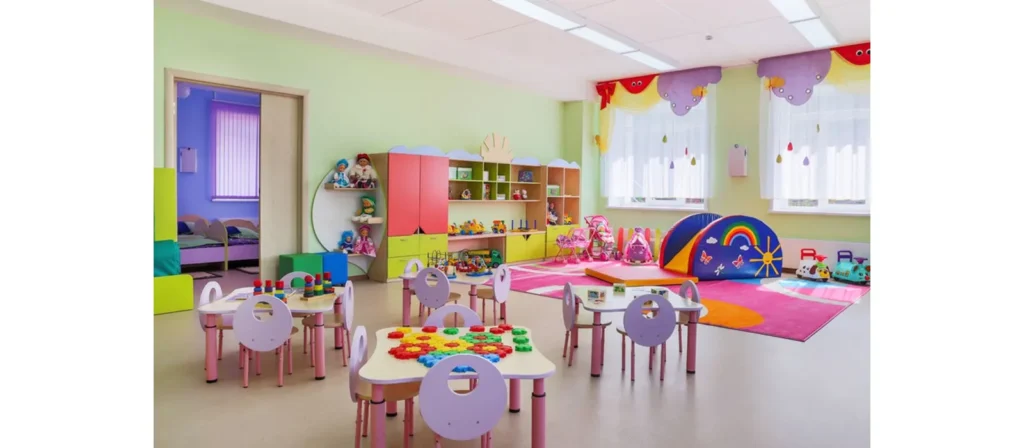
Athari za Kisaikolojia za Ubunifu wa Darasa
Research suggests that colors, spatial organization, and visual stimuli significantly impact children’s learning abilities and emotional well-being. Bright, warm colors can energize children, while soft pastels promote calmness and focus. Defined spaces within the classroom provide structure and help children transition smoothly between activities.
Kuhimiza Kujifunza Kupitia Kusisimua kwa Maono
Children in their early years learn best through sensory experiences. Thoughtfully designed preschool classroom decorations, including educational posters, themed displays, and hands-on interactive elements, help reinforce learning concepts and encourage exploration.
Kukuza Ukuaji wa Kijamii na Kihisia
A well-decorated classroom supports not just academics but also social and emotional development. Displays that celebrate student achievements, diversity, and teamwork foster a sense of pride and inclusivity among children.
15 Preschool Classroom Decoration Ideas
Below are the 15 core ideas with practical guidance. Some entries include short project plans, supply lists, or implementation steps. You don’t need to implement every idea at once; pick the ones that match your program’s goals, space, and children’s needs.
1. Create a Calming Environment
One of the first and most critical decorating decisions is setting the emotional tone of a classroom. Preschoolers thrive when the environment feels safe, predictable, and warm. Instead of overwhelming every wall with bold colors or every ceiling with dangling mobiles, aim for visual balance. Research indicates that classrooms with excessive visual stimulation can actually hinder attention and learning: in one study, children in heavily decorated rooms were off‑task significantly more than in sparsely decorated spaces.
- Choose a restrained palette. Pick two base tones and a bright accent used sparingly. For example: warm cream, sage green, and sunflower yellow accents. Use these across rugs, baskets, and bulletin borders.
- Designate quiet zones. Use a soft rug and low canopy to define a reading/calm area. Keep that area free from high‑contrast posters or flashing lights.
- Limit visual clutter. Opt for a few meaningful displays instead of covering every wall. Leave “negative space” — blank wall sections that reduce visual noise and let children rest their eyes.
- Lighting choices. Use diffused light — sheer curtains for windows and a soft lamp in the calm corner. Avoid direct harsh fluorescent lighting over the entire gathering area.
2. Decorate a Reading Area
A classroom without a dedicated reading space is like a library without shelves. Reading corners are not just functional—they’re emotional havens for preschoolers. A cozy, well-decorated reading area can promote literacy, build emotional security, and foster independent exploration.
Use soft seating like beanbags or small armchairs. Install low bookshelves so children can access books on their own. Then add thematic wall décor that matches current reading topics—jungle animals, fairy tales, outer space.
You can also include:
- Hanging mobiles with letters or characters
- Cushioned rugs with alphabet patterns
- Simple fabric canopies to create a “nook” feeling
If you have windows nearby, add light curtains to filter natural light and prevent distractions. The goal is to make this area inviting and slightly enclosed.
3. Decorate the Classroom with Kids’ Art
Displaying children’s creations increases motivation, builds identity, and makes the classroom feel like a shared community. It’s high‑impact, low‑cost décor that showcases learning processes, not just final products.
- Rotating gallery walls with framed student pieces
- A clothesline with clips to hang paintings
- Laminated drawings with each child’s name below
Make sure art is hung at the child’s eye level. You’re not just creating décor—you’re building self-esteem. It’s also a subtle classroom management tool. When children feel proud of their environment, they’re more likely to care for it.
4. Ideas for Bulletin Boards
Bulletin boards can be decorative, functional, and instructional all at once. They’re not just placeholders—they’re storytelling spaces. With thoughtful design, bulletin boards can support themes, showcase learning progress, and communicate important information.
- Monthly themes like seasons, community helpers, or holidays
- Student portfolios with writing samples or artwork
- Behavioral charts using positive reinforcement visuals
- Letter/Number of the week boards
Keep your boards interactive when possible. Add Velcro elements, flip panels, or spaces for student input. The more children can manipulate or engage with the board, the better.
Limit yourself to one or two major bulletin boards in the classroom, and keep the rest of the wall space calm and breathable.
5. Fun Birthday Displays
Celebrating birthdays in preschool is a great decorating opportunity. it builds community, acknowledges each child, and adds joy. But it’s important to balance fun with focus and inclusivity. But instead of generic, store-bought birthday posters, make your display personal and meaningful.
- A “birthday train” with each child’s photo in a train car
- A cupcake wall with children’s names and birthday dates
- A simple timeline with month headers and child-made icons
- Use a consistent format and color scheme to create continuity.
6. Design a Visual Schedule Board
Young children thrive on routine. When they can see what’s coming next, they feel more in control—and less anxious. A visual schedule board shows the daily routine in pictures and words. You can attach visuals with Velcro or magnets to move them around.
Images with short word labels are suitable for emerging readers and older children. Post the schedule near the door or gathering area for easy reference each morning. Choose a location near a transition (e.g., entryway, carpeted area) and at children’s eye level.
7. Decorate with a Welcome Banner
The first thing children see when they enter the classroom matters. A welcome banner can immediately establish a positive tone for the day.
Avoid overly flashy, generic “WELCOME!” signs. Instead:
- Use multi-language greetings to reflect classroom diversity
- Incorporate student photos or self-portraits
- Use themes like rainbows, trees, or sunshine to make it cheerful
You can involve children in making the banner. This increases their connection to the space and helps transition them into the learning environment from the very first step through the door.
8. Decorate the Classroom Door
The classroom door is an everyday canvas. Use it to reflect your classroom identity, themes, or even seasonal topics. With thoughtful decoration, it can become an extension of your classroom identity and a daily point of engagement.
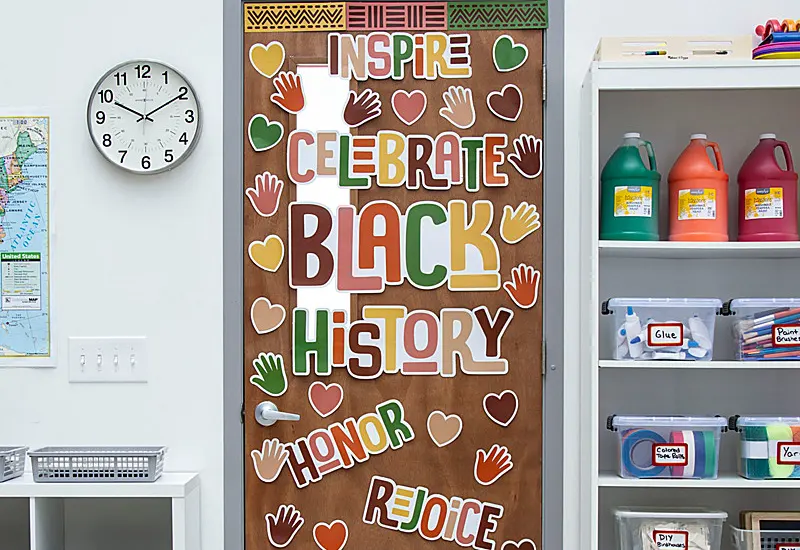
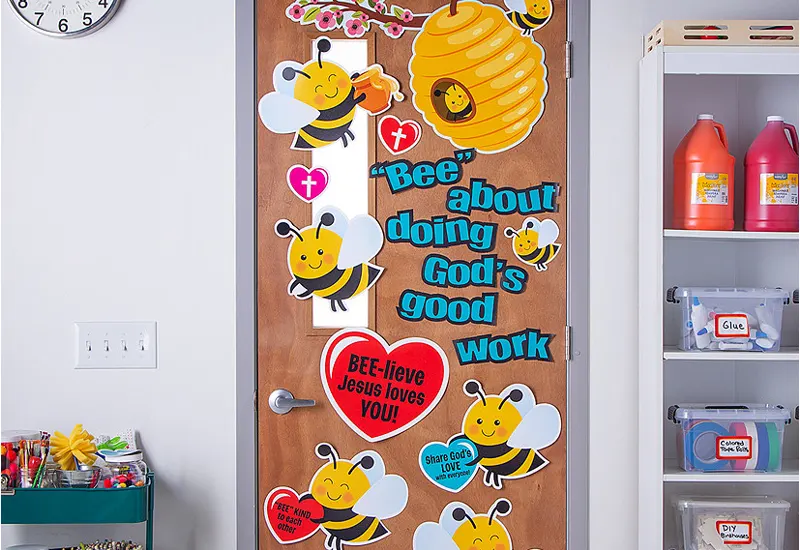
Ideas include:
- A “Who’s in Our Class?” door with children’s names and pictures
- A “Reading Adventure Starts Here” design for literacy-focused classrooms
- Seasonal or thematic displays like autumn leaves or space missions
9. Decorate the Windows and Ceiling
Many preschool teachers overlook the vertical space in the classroom. But the ceiling and windows are key visual elements in a child’s world. When decorated thoughtfully, they can bring warmth and depth to the classroom atmosphere.
Try these ideas:
- Paper lanterns or hanging pom-poms in thematic colors
- Mobiles representing seasons, numbers, or classroom mascots
- Window decals of animals, weather, or shapes
Be sure to balance visibility with safety. For windows, keep visibility clear at adult eye level but add designs at child height to make it engaging for them.
10. Use Rugs and Mats to Create Learning Areas
Floor decorations aren’t always visible. They’re also functional zones. Use rugs and mats to divide space and set behavioral expectations. Choose materials that are non-slip, easy to clean, and sized correctly for your classroom layout. Always opt for neutral or primary color schemes that match the overall classroom tone—not neon chaos.
11. DIY Wall Decor
DIY wall decorations are one of the most effective ways to bring personality and heart into your preschool classroom—without sacrificing budget or originality. Unlike store-bought posters that quickly become background noise, DIY décor invites participation, creativity, and connection.
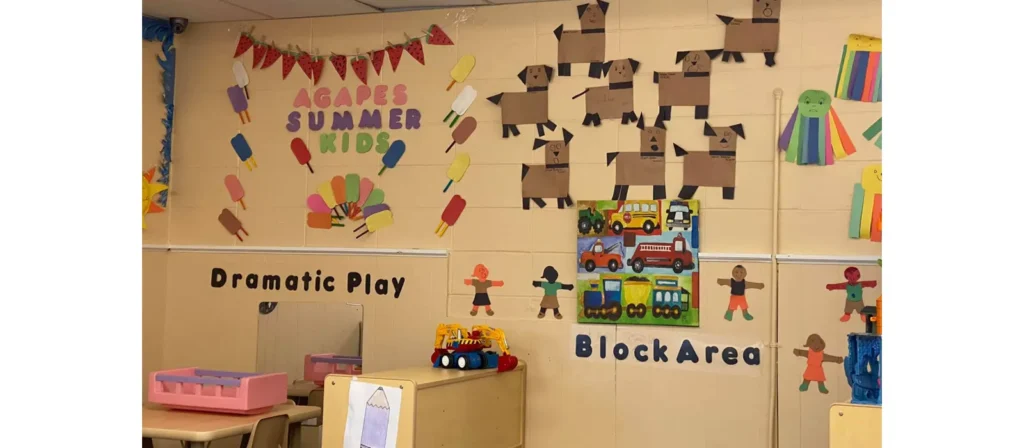
Here are DIY wall décor ideas:
- Create a “handprint tree” where each child adds their painted handprint as a leaf—then use it to track growth or seasons.
- Make a fabric or felt “learning journey” banner where children add personalized icons (e.g., “I learned to write my name,” “I counted to 20”).
- Use recycled magazine or paper scraps to create a colourful mosaic of shapes for a math wall.
- Use string and clothespins across a wall to display children’s current work.
- Have children help cut large letters or shapes for thematic walls and then allow them to place or arrange the pieces themselves.
- Laminate key visuals you use often so they last longer and can be reused year after year.
12. Creative Decorative Objects
While walls, boards, and rugs set the tone, the small decorative objects around your classroom are what give it warmth, depth, and storytelling. These elements should be intentional—not clutter—and always child-safe.
Classroom Mascots
Use a plush toy, puppet, or character figure as a “classroom mascot.” This character can sit on a shelf, participate in circle time, and even have its own name and backstory. It becomes a beloved member of the group and offers continuity.
Thematic Tabletop Displays
Create small decorative setups for the season or unit theme. For example:
- A basket of fall leaves, pinecones, and tiny pumpkins
- A globe, astronaut doll, and stars for space week
- Dinosaurs and faux fossils during a prehistoric unit
Keep these displays simple and child-accessible, using them to spark curiosity and discussion.
Repurposed Natural Materials
Use wooden bowls, stones, shells, or driftwood as both décor and manipulatives. They add texture and a sensory element to the environment, aligning well with Reggio and Montessori principles.
Family Photo Walls or Frames
A small corner with framed family photos helps create emotional security and connection. Each child can bring a family photo to display. This humanizes the room and helps children feel grounded.
Don’t overdo it—just a few key messages placed meaningfully can have a big impact.
13. Name Tags and Personalized Spaces
Personalization in the classroom helps each child feel valued and visible. At this developmental stage, children are forming a sense of identity, and seeing their name and picture on their cubby, seat, or project folder affirms their belonging in the classroom.
Name tags should be simple, clear, and easy to recognize. Ideally, they include the child’s name in large print alongside a visual cue, like a photo or a symbol. This helps children who are still developing literacy skills quickly locate their belongings. Teachers can even involve students in designing their own labels, giving them a sense of ownership and a creative opportunity to express themselves.
These personalized elements can extend beyond cubbies and tables. Mailboxes, supply bins, art drying racks, and classroom job charts can all be labeled with children’s names.
14. Music and Sound as Part of the Decor
While not visual, acoustic decorations can deeply influence the classroom atmosphere. Incorporating soft music, sound centers, or even musical instrument walls can enhance mood and support auditory learning.
Design ideas:
- A hanging bell wall where children can gently ring chimes
- A music corner with soft drums, maracas, or xylophones
- Background classical or nature soundtracks played during quiet time
Sound should be soothing, not overstimulating. Just like color and light, sound is an environmental tool that shapes behavior.
15. Reuse and Use Old Materials for Decorating
One of the most practical, sustainable, and creative decorating strategies is repurposing and reusing materials. This fosters resourcefulness, reduces cost, and often generates richer student‑centered décor.
Preschool decorating doesn’t need to strain your budget. Some of the most creative classroom spaces I’ve seen used entirely upcycled and repurposed materials.
- Turning old T-shirts into wall banners
- Using scrap fabric to create hanging flags
- Repurposing cardboard into student art canvases
- Framing sections of newspaper or old picture books
Mazingatio ya Mapambo ya Darasa la Shule ya Awali
Decorating a preschool classroom may seem like a simple task, but in reality, it requires thoughtful consideration, strategic planning, and a strong understanding of child development. An effective preschool classroom should be colorful and cheerful, yes—but also functional, safe, and developmentally appropriate. Every visual element you introduce into the space should serve a purpose: to support learning, reinforce routines, build a sense of community, or encourage independence.
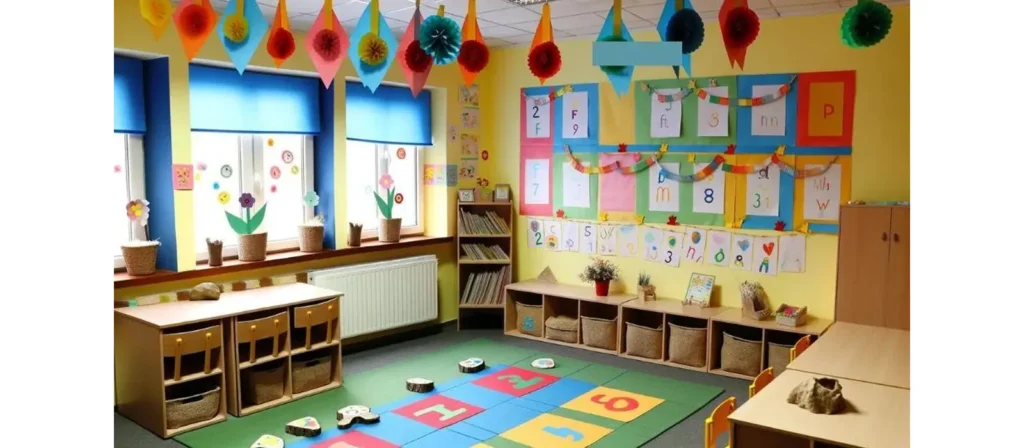
1. Use Bright Colors
Bright colors capture attention and create excitement. Young children are naturally drawn to vivid hues, and the right color palette can stimulate learning, reinforce themes, and differentiate classroom zones. However, the use of color should be intentional. Too much brightness everywhere can cause visual clutter and overstimulation.
2. Keep It at Eye Level
Since preschoolers spend most of their day sitting, playing, and walking close to the floor, decorations should be placed at their eye level. This helps children engage more meaningfully with visual aids, thematic displays, and instructional signage. It also fosters independence.
3. Keep Children Involved
When children help create or choose classroom decorations, they feel a sense of ownership and belonging. It fosters confidence and builds classroom community. Their contributions also reflect real learning and personal expression, making the décor more meaningful than store-bought posters.
4. Stay Organized
Young children rely heavily on structure. When decorations are messy or overdone, they blur those boundaries and confuse behavioral cues. Keeping things orderly doesn’t mean dull. It means that every visual element has a purpose, and everything has a place. Organized décor supports calmness, reduces conflict, and builds a productive learning environment where children feel secure.
5. Use Safe Materials
Safety should never be compromised in favor of aesthetics. All décor must be made from non-toxic, age-appropriate, and durable materials. Safety concerns include choking hazards, sharp edges, or flammable items. Ensuring all materials meet health and safety standards protects both children and staff, reducing risk during daily activities.
6. Keep Safety in Mind
Beyond material safety, decoration placement affects visibility, traffic flow, and emergency access. Hanging décor must be secure, exits must remain clear, and walkways must be free of tripping hazards. Designing with safety in mind prevents accidents and supports smooth classroom operations.
7. Choose the Right Furniture
Classroom decoration doesn’t start with posters and streamers—it starts with furniture. The layout, color, height, and placement of your tables, chairs, cubbies, and shelving units all play a role in how the classroom feels and functions.


- Select age‑appropriate furniture: Child‑sized tables, chairs, shelves at reachable heights.
- Consider flexible furniture: Pieces that can move easily or reconfigure support dynamic décor zones and seasonal changes.
- Furniture should serve dual purposes: For example, bookcases that display books cover‑out, or low cabinets with decorative tops to define zones and display children’s work.
- Matches the decor: Consistent finishes, clean lines, minimal patterns help décor and furniture feel unified.
- Durability and maintenance: Furniture for preschoolers must withstand active use, spills, and be easy to clean and rearrange.
8. Remember to Change Your Decor
Children thrive on novelty and seasonal rhythms. Updating classroom decorations throughout the year keeps the environment stimulating and relevant. Whether it’s monthly bulletin boards, seasonal themes, or rotating student artwork, a changing environment supports curiosity and engagement. It also reinforces concepts like time, transitions, and cycles. However, changes should be predictable and structured—not random. A consistent update schedule helps children anticipate change and adjust comfortably. Planning décor updates alongside curriculum themes is the most effective approach.
9. Control Your Budget
A well-decorated classroom doesn’t have to break the bank. Reusing materials, incorporating student artwork, and DIY projects can achieve meaningful, personalized décor without excessive spending. Budget-friendly choices also model sustainability and creative problem-solving for children.
How to Decorate Spaces with Different Functions?
Darasa lililopangwa vizuri linapaswa kuwa na maeneo yaliyofafanuliwa wazi kwa shughuli tofauti. Nafasi hizi huwasaidia watoto kuelewa mahali ambapo kazi mahususi hufanyika na kukuza mabadiliko rahisi siku nzima.
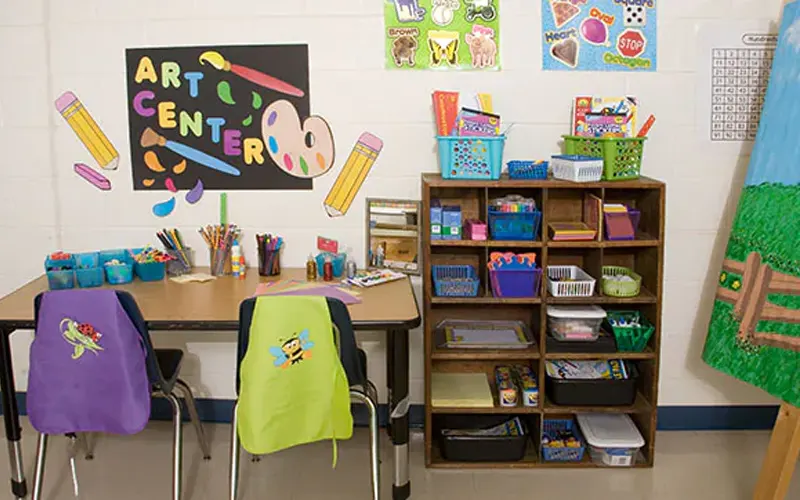
Kituo cha Sanaa cha shule ya mapema
An kituo cha sanaa ni lazima iwe nayo kwa ajili ya kukuza ubunifu na kujieleza. Ihifadhi kwa nyenzo zinazofaa watoto kama vile kalamu za rangi, rangi na vifaa vya ufundi vilivyosindikwa. Tumia maonyesho ya rangi ya ukuta na rafu za kukaushia ili kuonyesha mchoro wa wanafunzi, na kufanya nafasi iwe ya kusisimua na kufanya kazi.
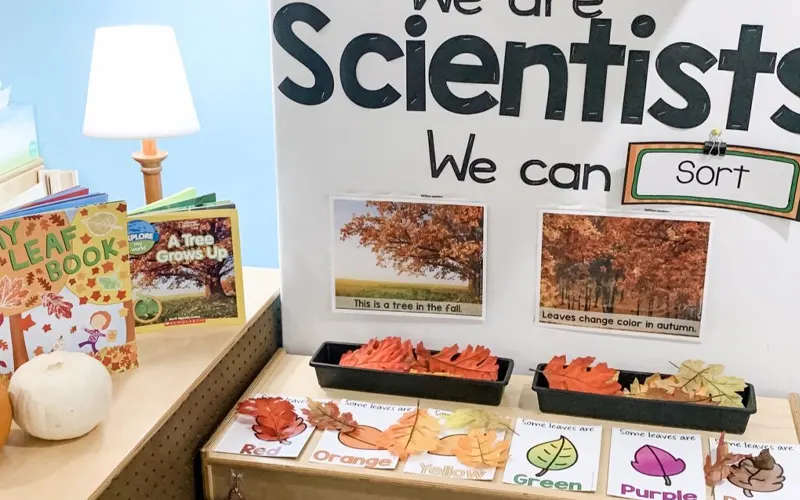
Kituo cha Sayansi cha Shule ya Awali
A mikono juu kituo cha sayansi huchochea udadisi na uchunguzi. Weka eneo kwa miwani ya kukuza, mapipa ya hisia na majaribio rahisi. Mabango ya asili, sayari, na mwili wa mwanadamu yanaweza kutumika kama mapambo ya darasani ya shule ya mapema, kuwatia moyo vijana kuuliza maswali na kugundua.
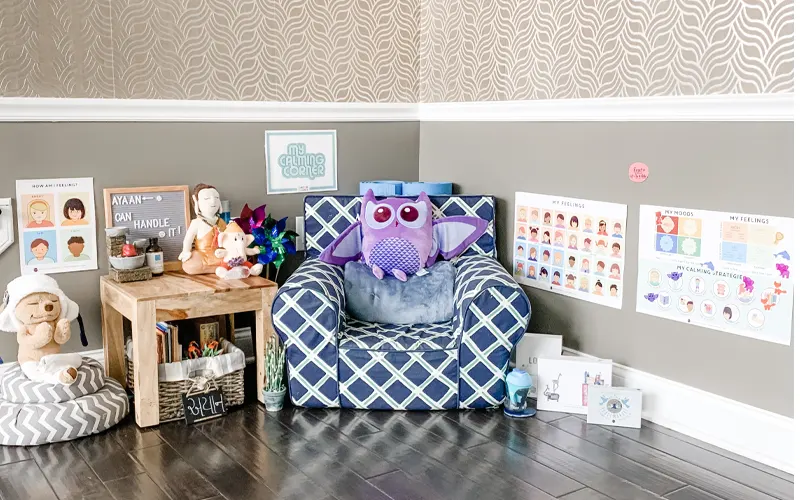
Kona ya kutuliza
A kona ya utulivu husaidia watoto kujidhibiti na kudhibiti hisia. Tumia viti laini, rangi zilizonyamazishwa na vipengele vya hisia kama vile vinyago vya kuchezea au blanketi zenye uzani. Kuongeza mapambo ya mandhari ya asili, kama vile mwavuli wa anga yenye nyota au mwangaza wa upole, kunaweza kufanya nafasi iwe ya kupendeza zaidi.
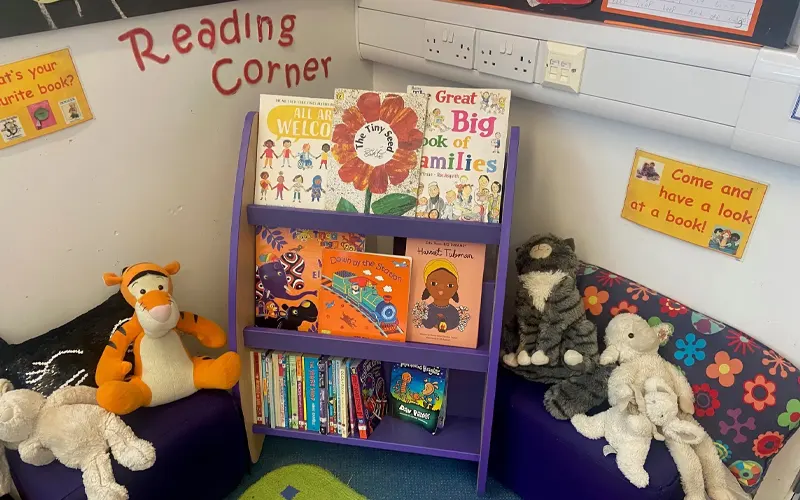
Kona ya Kusoma Darasani
Sehemu nzuri ya kusoma inahimiza kupenda vitabu. Panga rafu na vitabu vya picha vinavyoweza kufikiwa, ongeza mifuko ya maharagwe au matakia ili kustarehesha, na upamba kwa mabango ya alfabeti au maandishi ya ukutani yenye mandhari ya hadithi ili kuunda nafasi ya fasihi ya kuvutia.
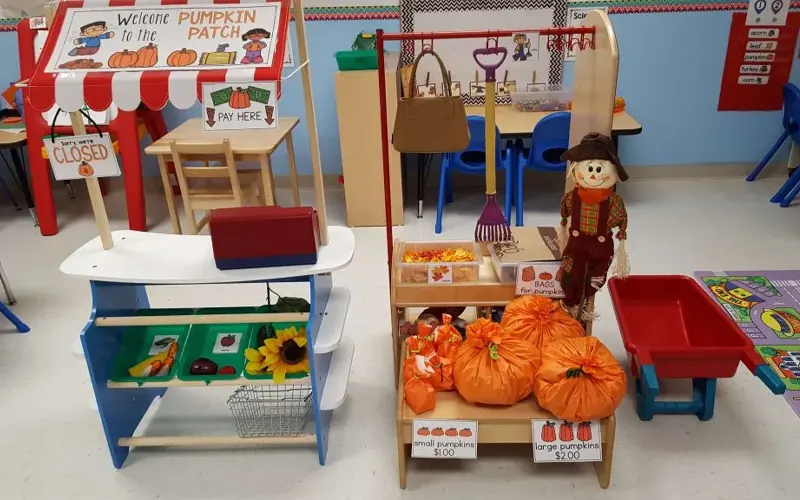
Eneo la Mchezo wa Kuigiza
Mchezo wa kuigiza huongeza ujuzi wa kijamii na utambuzi. Iwe ni jiko la kuigiza, soko dogo, au ofisi ya daktari, vifaa vya kuigwa na mandhari yenye mandhari vinaweza kuleta uhai wa mchezo wa kibunifu. Zungusha usanidi mara kwa mara ili kuweka nafasi ivutie watoto.
Mapambo ya Msimu ya Darasa la Shule ya Awali
Kupamba darasa la shule ya mapema kulingana na misimu huweka mazingira safi, ya kuvutia na ya kuelimisha. Mandhari ya msimu huwasaidia watoto kuungana na asili, kuchunguza mabadiliko katika ulimwengu unaowazunguka na kusherehekea matukio maalum. Iwe ni maua angavu kwa majira ya kuchipua au chembe za theluji zinazopendeza kwa majira ya baridi, mapambo ya msimu wa darasa la chekechea huongeza hali ya ujifunzaji na kufanya darasa kuwa mahali pa kusisimua kwa wanafunzi wachanga.
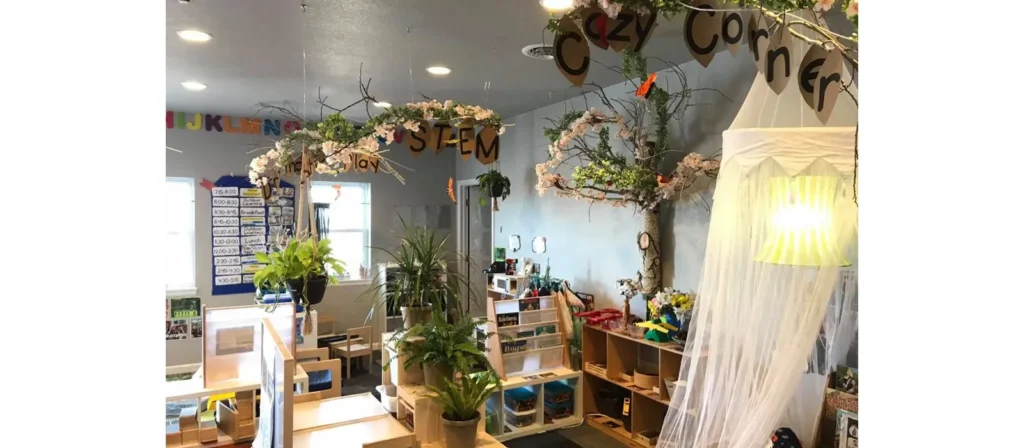
Mapambo ya Darasa la Chekechea
Majira ya kuchipua ni msimu wa kusasisha, na kuifanya kuwa wakati mwafaka wa kujumuisha mandhari safi, ya rangi na yanayotokana na asili ya mapambo ya darasa la shule ya awali.
- Mapambo ya Ukuta: Ili kuunda mazingira mazuri, tumia mapambo ya ukuta wa darasa la shule ya awali kama vile vipandikizi vya vipepeo, maua ya maua na mabango ya upinde wa mvua.
- Mapambo ya Mlango wa Darasa: Zingatia mawazo ya mapambo ya milango ya darasa kwa shule ya chekechea, kama vile mlango wa “Bustani inayokua” yenye maua ya karatasi na majina ya wanafunzi kama petali.
- Mapambo ya dari: Mapambo yanayoning'inia kama vile mawingu ya karatasi, matone ya mvua na mwanga wa jua yanaweza kufanya nafasi iwe nyepesi na yenye hewa.
- Pembe za Shughuli: Unda kituo cha kupandia ambapo watoto wanaweza kukua mimea midogo au mimea, ikijumuisha mawazo ya mapambo ya darasani kwa shule ya mapema yenye mandhari ya bustani.
- Mapambo Yanayoweza Kuchapishwa: Tumia mapambo ya darasa la chekechea nyenzo zinazoweza kuchapishwa kama vile mabango ya alfabeti yenye mandhari ya majira ya kuchipua na chati za kujifunza kulingana na asili.
Mapambo ya Darasa la Majira ya Chekechea
Mapambo ya darasa la majira ya joto yanapaswa kuonyesha joto, matukio, na shughuli za nje za kufurahisha. Mawazo ya mapambo ya darasani kwa shule ya chekechea wakati wa kiangazi mara nyingi hujumuisha mandhari ya ufuo, bahari na kambi.
- Mapambo ya Ukuta: Onyesha mawimbi ya bahari, samaki na shells kwa mapambo ya ukuta kwa darasa la shule ya mapema ili kuunda ulimwengu wa chini ya maji.
- Mapambo yenye Mandhari ya Darasani: Tumia mada ya darasa la shule ya mapema mapambo yanayoangazia mipira ya ufukweni, kasri za mchanga, na miwani ya jua kwa mazingira ya kucheza.
- Windows ya darasa: Ongeza picha za rangi za jua au sanaa ya alama za mikono ili kung'arisha mapambo ya dirisha la darasa la shule ya mapema.
- Mapambo ya DIY: Jumuisha upambaji wa darasa la DIY wa shule ya chekechea kwa kutengeneza feni za karatasi, kite na magurudumu ya pini.
Mapambo ya Darasa la Shule ya Awali
Mapambo ya kuanguka huleta tani za joto, mandhari ya mavuno, na sherehe za msimu. Mapambo ya kuanguka kwa darasa la shule ya mapema mara nyingi huzingatia maboga, majani, na viumbe vya misitu.
- Mbao za Ukuta na Matangazo: Tumia mawazo ya mapambo ya ukuta wa darasa kwa shule ya chekechea yenye majani yanayoanguka, viogo vya kuogofya, na matukio ya vuli maridadi.
- Milango ya Darasa: Pata ubunifu na mawazo ya mapambo ya milango ya darasani kwa shule ya chekechea, kama vile “Kiraka cha Maboga” kilicho na jina la kila mwanafunzi kwenye kibuyu.
- Mapambo ya Kunyongwa: Mapambo ya dari ya darasa la shule ya awali yanaweza kuwa na majani ya vuli, mikuyu na bundi.
- Vipengele vya Kuingiliana: Mti wa shukrani ambapo watoto huongeza maelezo ya shukrani ni wazo nzuri la mapambo ya darasa la shule ya mapema.
Mapambo ya Darasa la Shule ya Awali ya Majira ya baridi
Mandhari ya msimu wa baridi huunda mazingira ya kustarehe na ya ajabu ya kujifunzia kwa kutumia chembe za theluji, utitiri na mapambo ya sherehe. Mapambo ya majira ya baridi kwa darasa la shule ya awali huleta msisimko watoto wanapojifunza kuhusu hali ya hewa ya baridi na likizo.
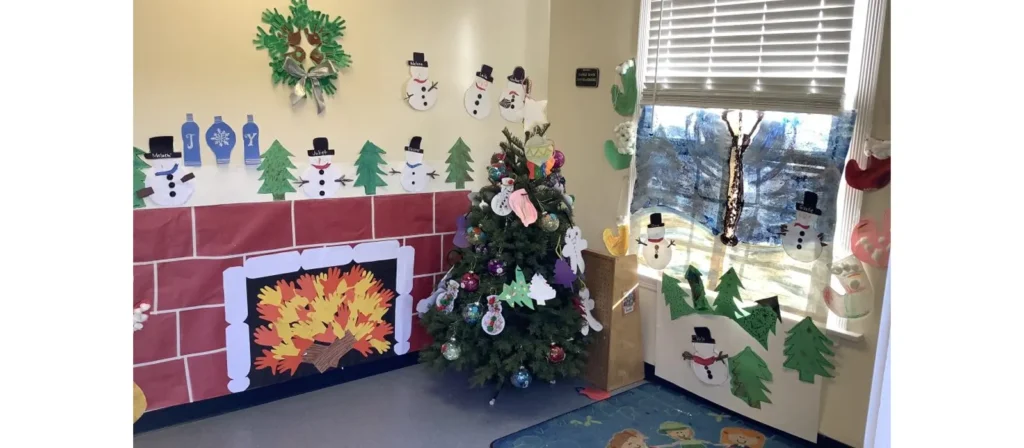
- Mapambo ya Ukuta na Dirisha: Tumia mapambo ya majira ya baridi ya madarasa ya shule ya awali kama vile vipande vya vipande vya theluji, maua ya theluji na wanyama wa majira ya baridi.
- Milango ya Darasa: Mawazo ya mapambo ya milango ya darasa la majira ya baridi kwa shule ya chekechea yanajumuisha mandhari ya "Winter Wonderland" na watu wanaoteleza kwenye theluji na eneo la kuteleza.
- Mapambo ya dari: Andika theluji za pamba au taa laini kwa hali ya sherehe.
- Maeneo ya hisia: Pipa la hisia zenye mandhari ya theluji na vinyago bandia vya wanyama wa theluji na majira ya baridi huboresha mandhari ya kupamba darasani kwa shule ya chekechea.
Mapambo ya Darasa la Shule ya Awali ya Likizo
Mapambo ya likizo hufanya madarasa ya shule ya mapema kuwa ya sherehe na ya kusisimua. Iwe ni Halloween, Sikukuu ya Shukrani au Krismasi, mapambo ya darasa la shule ya mapema huwasaidia watoto kuelewa mila za kitamaduni huku wakiongeza uchangamfu na furaha kwenye nafasi.
Mapambo ya Darasa la Halloween ya shule ya mapema
Mapambo ya Halloween huleta ucheshi wa kucheza darasani. Mapambo ya halloween ya darasa la shule ya mapema yanapaswa kuwa ya kufurahisha na sio ya kutisha sana.

- Mapambo ya Ukuta: Tumia mapambo ya darasani kwa shule ya chekechea, kama vizuka rafiki, maboga na popo.
- Milango ya Darasa: Mawazo ya mapambo ya mlango wa darasa la shule ya awali yanaweza kujumuisha mandhari ya "Monster Rafiki" au "Kiraka cha Maboga".
- Mapambo Maingiliano: Ubao wa kuhesabia wa "Hila-au-Tibu" unaweza kuwa sehemu ya mapambo ya darasa la shule ya mapema huku ukiimarisha ujifunzaji.
- Ufundi wa DIY: Wahimize watoto kuunda jack-o'-taa za karatasi na utando wa buibui ili kupamba darasa.
Mapambo ya Darasa la Shule ya Awali ya Shukrani
Mapambo ya shukrani huzingatia shukrani, mavuno, na umoja. Mapambo ya shule ya chekechea kwa ajili ya Shukrani yanaweza kujumuisha rangi za vuli zenye joto na vipengele vya mada.
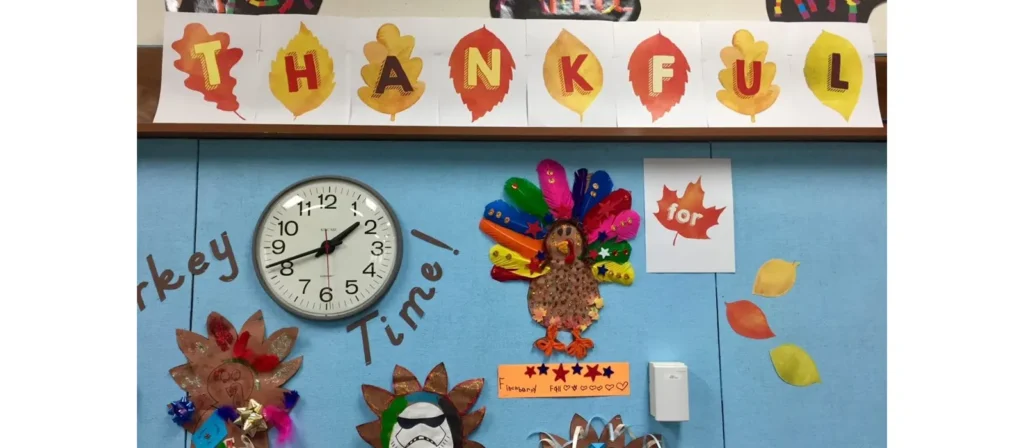
- Mbao za Ukuta na Matangazo: "Mti wa Shukrani" wenye majani yaliyotengenezwa na wanafunzi yanayoonyesha shukrani hutengeneza mapambo ya kuvutia ya ukuta wa darasa la shule ya awali.
- Mapambo ya Mlango wa Darasa: Mapambo ya milango ya darasa la shule ya awali kama bata mzinga na alama za mikono za wanafunzi huku manyoya yakiongeza mguso wa kibinafsi.
- Mapambo ya Jedwali: Tumia mapambo kwa vipengele vya darasa la shule ya awali kama vile maboga ya karatasi, cornucopias, na taji za maua za vuli.
Mapambo ya Darasa la Krismasi ya Shule ya Awali
Mapambo ya Krismasi huleta furaha na joto kwa mazingira ya shule ya mapema. Mapambo ya darasa la Krismasi ya shule ya mapema yanaweza kujumuisha rangi za likizo, wahusika wa sherehe na mandhari ya msimu wa baridi.
Mapambo yanayoweza kuchapishwa: Mapambo ya darasa la shule ya awali yanaweza kuchapishwa, kama vile chati za alfabeti za mandhari ya likizo na mabango ya nambari, ongeza mguso wa sherehe wa kujifunza.
Mapambo ya Ukuta na Dari: Tumia mapambo ya Krismasi, kama vile vipande vya theluji, miti ya Krismasi, na taa zinazometa, katika darasa la shule ya mapema.
Milango ya Darasa: Mawazo ya mapambo ya milango ya darasa la shule ya awali yanajumuisha "Warsha ya Santa" au mandhari ya "Nyumba ya mkate wa Tangawizi".
Kona ya Ufundi wa Krismasi: Mawazo ya mapambo ya darasa la Krismasi shule ya mapema yanaweza kujumuisha kituo cha kutengeneza mapambo ya DIY.
Hitimisho
Mapambo ya darasa la shule ya mapema huchukua jukumu muhimu katika kuunda uzoefu wa kujifunza kwa watoto wadogo. Darasa lililopambwa vizuri hutoa msisimko wa kuona, huhimiza mwingiliano, na kukuza ubunifu. Kwa kuchagua mandhari kwa uangalifu, kwa kutumia vipengele shirikishi, na kujumuisha mapambo ya msimu na likizo, waelimishaji wanaweza kuunda mazingira ya kujifunza na ya kuvutia.
Kuanzia kwa ubao wa matangazo wasilianifu hadi mapambo yanayotokana na asili, kila kipengele cha darasa kinapaswa kusaidia kujifunza huku kikifanya nafasi kuwa ya kukaribisha na kufurahisha. Mapambo yanapaswa kuwa ya kazi na ya kufurahisha, kuhakikisha kwamba watoto wanahisi msukumo kila siku wanapoingia kwenye darasa lao la shule ya mapema.
Kwa kuendelea kuburudisha mazingira, walimu wanaweza kuwaweka wanafunzi wakijishughulisha na kusisimka kuhusu kujifunza, na hivyo kutengeneza msingi wa udadisi na ubunifu wa maisha yote.

 Swahili
  English
  Arabic
  French
  Italian
  German
  Spanish
  Thai
Thai  Japanese
  Portuguese
  Russian
  Korean
  Vietnamese
  Indonesian
  Turkish
  Polish