

The purpose of sensory room ideas in schools is not to fill a space. It is to support students at moments when their bodies or emotions make learning difficult. When used well, sensory rooms help students reset rather than withdraw.
Choosing the right sensory room ideas requires understanding when students need movement, when they need pressure, and when they need quiet. It also requires knowing which tools can be managed consistently in a school environment.
This article explores sensory room ideas through real use cases found in schools. Each idea reflects how teachers integrate sensory supports into the school day.
Tactile Wall Panels
Tactile wall panels are a practical and effective sensory room solution for schools that need to support students’ sensory development without sacrificing valuable floor space. By integrating tactile experiences directly into the wall environment, these panels allow children to explore different textures, movements, and resistances in a safe, structured, and teacher-visible way.
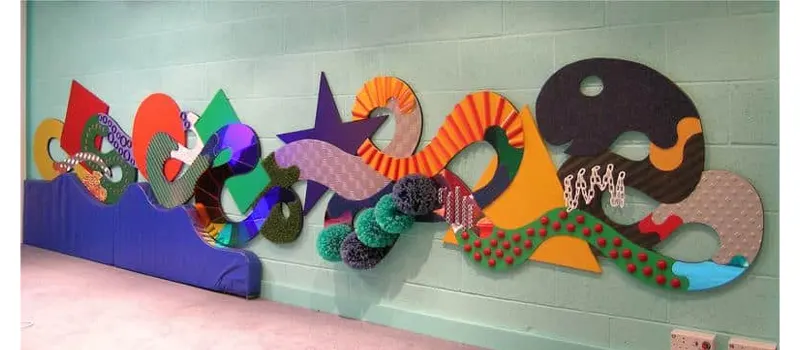
One of the key advantages of tactile wall panels in school settings is their space efficiency. Unlike floor-based sensory equipment or loose manipulatives, wall-mounted panels do not interfere with movement areas or group activities. This makes them especially suitable for small sensory rooms, calming corners, special education classrooms, and even transitional spaces such as hallways or waiting areas where students may need sensory input to stay regulated.
From a إدارة الفصل الدراسي perspective, tactile wall panels also offer clear benefits. Because they are fixed in place, they reduce clutter and eliminate the need for frequent setup or cleanup. Teachers can easily observe how students interact with the panels, ensuring appropriate use while maintaining a calm and orderly environment. This visibility is particularly important in school sensory rooms, where supervision and safety are always priorities.
Sensory and Developmental Benefits
- Develop tactile discrimination by recognizing differences in texture and resistance
- Strengthen hand awareness and early fine motor skills
- Support sensory processing and body awareness
- Use touch as a tool for emotional regulation and calming
Practical Setup Considerations for Schools
When integrating tactile wall panels into a school sensory room, thoughtful placement and design choices are essential. Panels should be installed at heights that are easily accessible to the intended age group, allowing students to engage naturally without strain or assistance. A balanced mix of textures is recommended to support exploration without overwhelming sensory input.
- Ensure panels are securely mounted and suitable for frequent daily use
- Choose tactile elements that contrast clearly while remaining calm and predictable
- Consider whether the panels will support independent exploration or guided sensory breaks
- Place panels in areas that allow supervision while minimizing distractions
Bubble Tube Corner
A bubble tube corner creates a calming visual focal point within a school sensory room, offering gentle movement, light, and sound that help students relax and refocus. The slow rise of bubbles and soft color changes naturally draw attention without overstimulation, making this setup especially effective for students who benefit from visual sensory input.
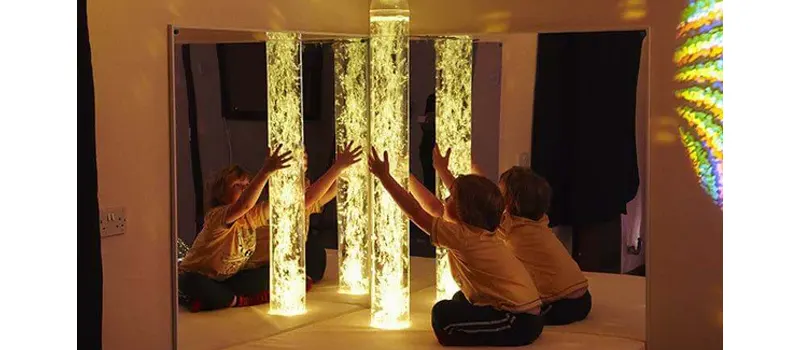
In school settings, bubble tube corners are often used as quiet zones rather than active play areas. They provide students with a predictable and soothing experience, which can be particularly helpful during emotional regulation breaks or transition times.
Sensory and Developmental Benefits
- Supports visual tracking and sustained attention
- Encourages relaxation and emotional regulation
- Helps students manage transitions and reduce sensory overload
- Provides a predictable, low-demand sensory experience
Practical Setup Considerations for Schools
When setting up a bubble tube corner in a school sensory room, placement and safety should be carefully considered. The area should feel inviting and calm while remaining easy for teachers to supervise. Bubble tubes work best when they are clearly defined as a quiet sensory space rather than a high-energy activity zone.
- Place the bubble tube on a stable base and ensure it cannot be tipped or pulled
- Position the corner away from heavy traffic to reduce distractions
- Use soft surrounding seating or mats to encourage calm observation
- Establish clear guidelines for viewing and interaction to maintain a regulated environment
Weighted Sensory Blankets
Weighted sensory blankets provide deep pressure input that can help students feel calm, grounded, and secure within a school sensory room. Unlike highly stimulating sensory tools, weighted blankets offer a quiet and predictable form of sensory support, making them especially useful for emotional regulation and rest periods during the school day.
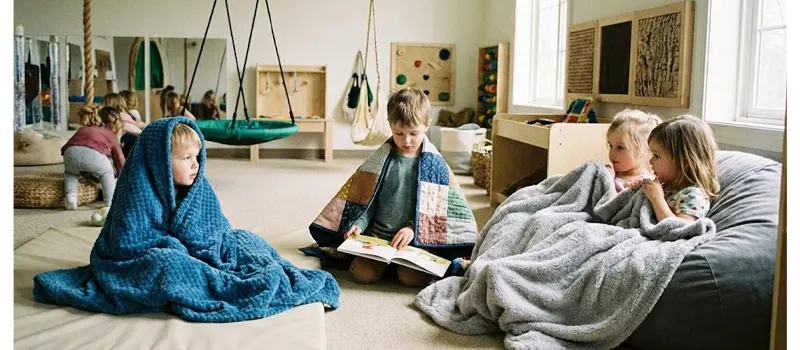
Because weighted sensory blankets are portable and flexible, they can support a range of student needs across different settings. Teachers may use them during reading time, quiet breaks, or one-on-one sensory support, helping students remain engaged and emotionally balanced throughout the day.
Sensory and Developmental Benefits
- Provides deep pressure input that supports emotional regulation
- Helps students feel grounded and secure during sensory breaks
- Supports focus and attention during quiet activities
- Encourages self-awareness and independent calming strategies
Practical Setup Considerations for Schools
When using weighted sensory blankets in school sensory rooms, safety and appropriate use are essential. Blankets should be selected and introduced with clear guidelines to ensure they support regulation without discomfort or misuse.
- Choose weights that are appropriate for the age and size of the students
- Use blankets only during supervised calm or rest periods
- Provide a designated storage area to maintain cleanliness and organization
- Establish clear rules for when and how the blankets may be used
Sensory Swing (Hammock Style)
A hammock-style sensory swing introduces controlled gravitational movement into the school sensory room, supporting students who need body-based input rather than visual or tactile stimulation. The gentle back-and-forth motion engages the vestibular system in a way that promotes physical awareness and emotional regulation.
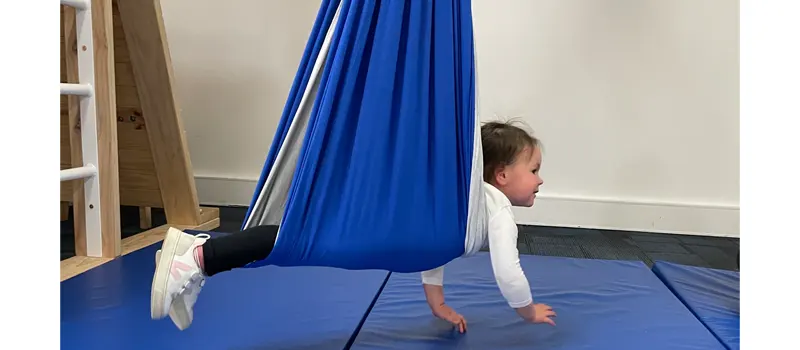
In contrast to floor-based sensory tools, the hammock swing offers a suspended experience that helps students reconnect with their sense of balance and body position. This is especially beneficial for learners who struggle with restlessness, low body awareness, or difficulty settling during transitions. The enclosed fabric design also provides a feeling of containment, which many students find grounding and reassuring.
Sensory and Developmental Benefits
- Supports vestibular processing and balance awareness
- Encourages calming, rhythmic movement
- Helps students regulate energy levels and emotions
- Provides deep sensory input that promotes body awareness
Practical Setup Considerations for Schools
When installing a hammock-style sensory swing in a school sensory room, safety, supervision, and spatial planning are essential. Clear boundaries and usage guidelines help ensure that the swing supports regulation rather than overstimulation.
- Ensure ceiling mounts or support frames are professionally installed and regularly inspected
- Allow sufficient clearance around the swing to prevent collisions
- Limit use to one student at a time under adult supervision
- Establish time limits to maintain predictable and fair access
Textured Sensory Paths
Textured sensory paths are engaging floor designs made from a variety of tactile materials that guide students through a sequence of movement-based tasks. These paths may incorporate rubber tiles, foam shapes, sandpaper patches, and even artificial turf to create a multi-sensory walking experience.
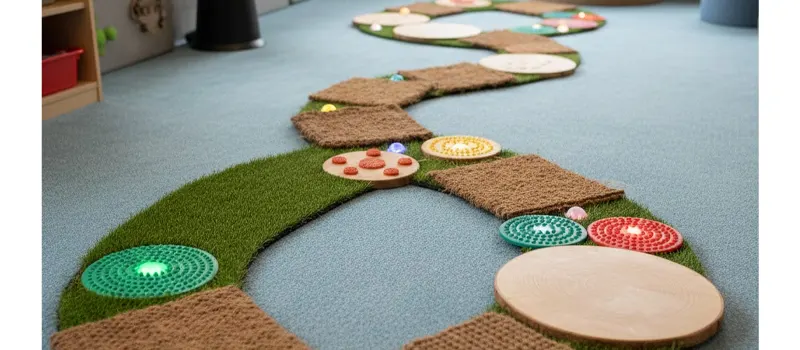
Commonly installed in school hallways or designated sensory rooms, they provide an easy and fun way for students to engage in gross motor activities while receiving important sensory input. Whether hopping, tiptoeing, or heel-walking along the path, children get the chance to improve their focus, balance, and self-regulation throughout the school day.
Sensory and Developmental Benefits
- Promotes proprioceptive and tactile input for body awareness
- Encourages movement breaks that support attention and focus
- Improves balance, coordination, and motor planning
Practical Setup Considerations for Schools
When adding a textured sensory path in a school setting, it’s crucial to consider placement, durability, and safety. Paths should be both inviting and non-obstructive, especially in high-traffic areas.
- Choose non-slip, easy-to-clean materials that withstand frequent use
- Keep the length manageable to encourage steady movement
- Design paths with clear visual cues and directional arrows
- Introduce the path once with clear modeling, then allow independent use
Calming Sound Station
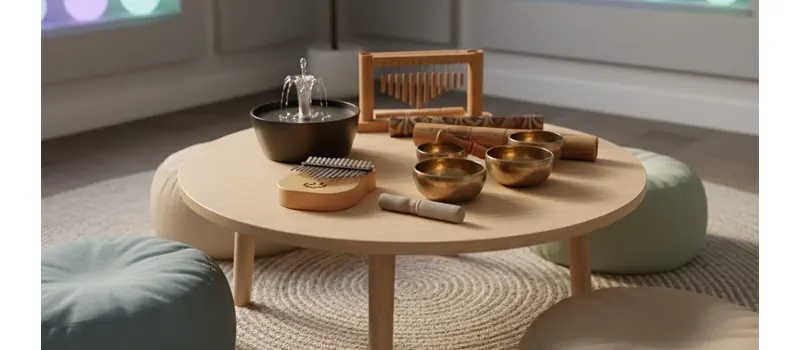
Soft, predictable audio such as nature sounds or gentle white noise can help mask background distractions and create a sense of emotional safety, especially in busy school environments. This space might include white noise machines, nature soundtracks (like ocean waves or rainfall), soft instrumental music, or even binaural beats. The goal is to create an auditory environment that promotes relaxation, emotional regulation, and mental focus.
Sensory and Developmental Benefits
- Supports auditory regulation in noisy environments
- Helps reduce stress and sensory overload
- Encourages emotional calming and sustained attention
Practical Setup Considerations for Schools
When setting up a calming sound station, the goal is to support focus and emotional balance without adding new distractions. Simplicity and predictability are key.
- Place the station in a quiet corner or a designated calm area
- Use limited sound options to avoid overstimulation
- Keep volume low and consistent throughout use
Aromatherapy Station
An Aromatherapy Station introduces the power of scent into the sensory room, offering calming or invigorating smells to support emotional regulation and sensory integration. Using essential oil diffusers, scent jars, or scratch-and-sniff cards, students can explore different aromas like lavender for calming, peppermint for alertness, or citrus for mood-lifting effects.
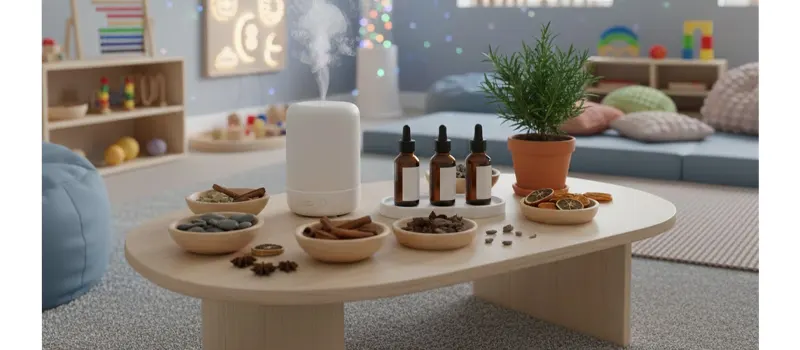
Scent is a powerful trigger for memory and mood, and for many students with sensory processing challenges, the right fragrance can help ground their emotions and restore focus. It’s a gentle, non-invasive tool that adds a whole new dimension to sensory exploration.
Sensory and Developmental Benefits
- Supports emotional calming through gentle sensory input
- Promotes calm, focus, or energy depending on scent choice
- Contributes to a sense of comfort and safety in the sensory space
Practical Setup Considerations for Schools
Scent can be tricky in shared environments, so careful planning is key. Choose hypoallergenic options and always prioritize safety and inclusivity.
- Use water-based diffusers or scent jars with replaceable cotton pads
- Clearly label all scents and allow students to choose their preference
- Avoid strong or polarizing fragrances; stick to light, natural options
- Monitor for allergies or sensitivities—obtain parent/guardian consent when needed
Fidget Tool Station
Most teachers have mixed feelings about fidget tools. On one hand, they know some students focus better when their hands are busy. On the other hand, they worry about noise, distraction, and the moment when a “support tool” turns into a toy.
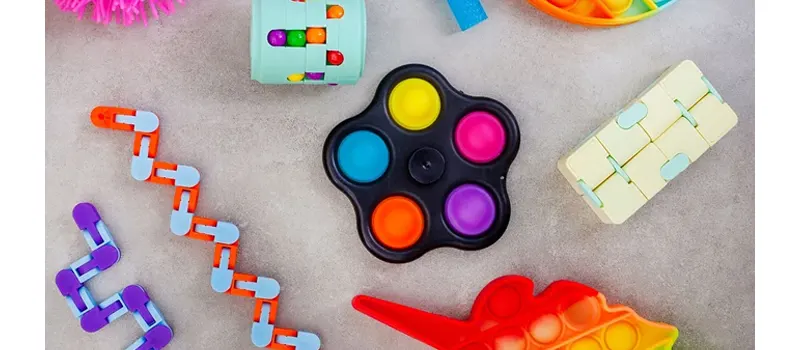
In practice, the value of a fidget station shows up during moments that require stillness. Listening time, independent work, or emotional regulation breaks are when students tend to fidget anyway. A clearly defined station gives that movement a place to go. Instead of tapping desks or bothering peers, students learn to channel small, controlled hand movements in a way that supports attention.
Sensory and Developmental Benefits
- Supports sustained attention through controlled hand movement
- Helps students manage restlessness without leaving their seat
- Encourages intentional choice and self-awareness
- Reduces off-task behaviors during quiet classroom moments
Practical Setup Considerations for Schools
To keep the Fidget Tool Station effective and manageable, structure and variety are essential. It should be inviting, organized, and easy for students to use responsibly.
- Offer a small, consistent selection rather than frequent changes
- Use labeled bins or trays for easy sorting and cleanup
- Establish clear usage rules to prevent distractions or misuse
Sensory Bottles Shelf
A Sensory Bottles Shelf is a visually calming and tactilely engaging feature in a sensory room, offering a collection of sealed bottles filled with glitter, beads, water, oil, or small floating objects. These bottles create slow, mesmerizing movements when shaken or turned, helping students self-soothe and refocus.

In practice, this setup works best for moments when students need something to look at rather than something to do. Watching glitter settle, objects slowly drift, or colors separate gives the brain time to slow down. For students who feel overwhelmed, this kind of visual pause can be more effective than verbal guidance or physical movement.
Sensory and Developmental Benefits
- Supports visual regulation through slow, predictable movement
- Helps students calm their nervous system without physical exertion
- Encourages sustained attention and visual focus
Practical Setup Considerations for Schools
A sensory bottles shelf should feel calm, contained, and predictable. The way the bottles are presented matters just as much as what is inside them.
- Place the shelf at eye level in a calm or regulated area
- Limit the number of bottles available to avoid overstimulation
- Use bottles that are securely sealed and durable for frequent handling
Interactive Light Table
An Interactive Light Table is a flat, illuminated surface that invites students to explore shapes, colors, textures, and patterns through hands-on play. It’s especially useful for visual and tactile learners, offering a soft, glowing backdrop for translucent manipulatives like colored tiles, sensory gel pads, sand trays, or magnetic shapes.
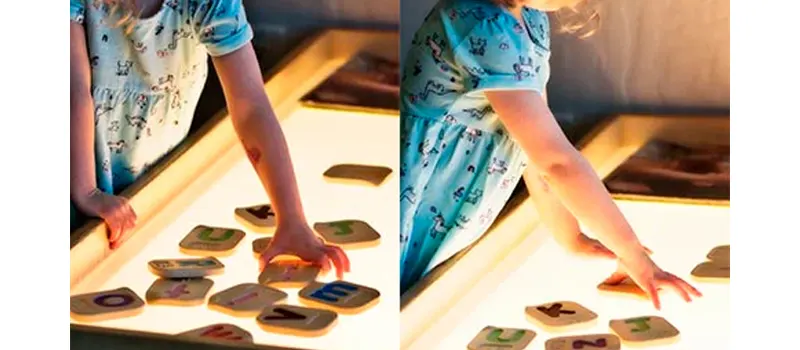
In school sensory rooms, light tables often become a bridge between calming and learning. Students who are not ready for movement-based input can sit and explore transparencies, shapes, or simple objects while staying regulated. The light provides clarity and contrast, which helps students slow down and organize their visual attention without needing constant guidance.
Sensory and Developmental Benefits
- Promotes creative expression through light-based play
- Stimulates visual processing and color recognition
- Supports calm engagement and focus, especially for visual learners
Practical Setup Considerations for Schools
To make the most of an interactive light table, thoughtful positioning, material choices, and maintenance routines are essential.
- Place in a dim or softly lit corner to enhance visual effects
- Use clear bins or trays to organize translucent manipulatives
- Clean surfaces regularly and check for overheating
- Incorporate curriculum-linked activities for cross-functional use
Climbing and Crawling Tunnel
A Climbing and Crawling Tunnel offers a dynamic way for students to engage their bodies in play that stimulates both proprioceptive and vestibular senses. Whether crawling through fabric tunnels, climbing over soft foam obstacles, or maneuvering through mini mazes, these structures help kids build spatial awareness, strength, and coordination.

What makes tunnels effective is not excitement, but resistance. The act of pushing, pulling, and squeezing through the space gives strong body feedback. For students who seek heavy input, this kind of movement often feels more satisfying than running or jumping, and it helps release tension without raising noise levels.
Sensory and Developmental Benefits
- Provides strong proprioceptive input through pushing and crawling
- Helps students build body awareness and spatial control
- Supports emotional regulation by releasing physical tension
Practical Setup Considerations for Schools
Creating a safe and inviting tunnel zone requires space planning, supervision, and equipment that’s both soft and sturdy.
- Use padded mats or foam blocks to line crawling paths
- Choose collapsible fabric tunnels or modular climbers for flexibility
- Ensure the space is supervised and cleared of obstacles
- Regularly inspect for wear, tear, or hygiene concerns
Crash Mat
A Crash Mat is a large, soft, impact-absorbing mat designed to give students a safe place to jump, fall, flop, or crash—on purpose! It’s one of the most effective tools for providing deep-pressure input and proprioceptive feedback, which helps regulate the nervous system.

These mats are especially beneficial for students who are sensory seekers or who need a healthy outlet for built-up energy. Used in a sensory room, a crash mat can serve as both a calming spot and a release valve for movement-based needs, all while keeping things safe and structured.
Sensory and Developmental Benefits
- Provides deep proprioceptive input through full body pressure
- Helps release excess energy in a controlled way
- Supports emotional regulation after high arousal moments
- Improves body awareness and impulse control
Practical Setup Considerations for Schools
Safety is key when incorporating a crash mat into a sensory space. Placement, supervision, and mat quality all make a big difference.
- Use in a clear, open area away from walls or hard furniture
- Pair with jumping platforms like mini-trampolines or foam blocks
- Choose mats with durable, wipe-clean covers and thick foam cores
- Set usage rules (e.g., one at a time, feet first) to prevent injury
Climbing Wall
A Climbing Wall in a sensory room or gym space offers students an exciting and purposeful way to build strength, coordination, and confidence. Unlike traditional playground walls, sensory-focused climbing walls are often low-height, padded underneath, and designed for horizontal (side-to-side) movement.
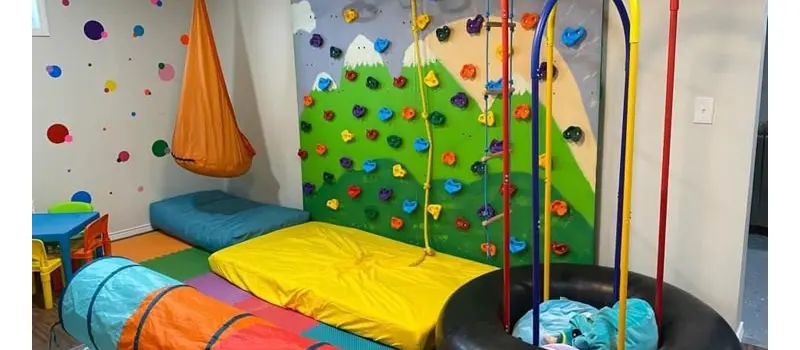
They encourage controlled, repetitive climbing that gives the body valuable proprioceptive and vestibular input. Climbing also supports self-regulation by offering a satisfying physical challenge. Whether it’s for a quick movement break or part of a sensory circuit, climbing walls can be a huge win for students who need to move to stay focused.
Sensory and Developmental Benefits
- Enhances motor planning, balance, and grip strength
- Encourages problem-solving and perseverance
- Provides an outlet for high energy in a structured, safe way
Practical Setup Considerations for Schools
Safety and accessibility are top priorities when adding a climbing wall to a school setting. Proper design and supervision are a must.
- Keep wall height low (typically under 6 feet) for safe use without harnesses
- Install padded flooring or crash mats underneath the entire climbing area
- Use large, easy-to-grip holds suitable for various ages and abilities
- Supervise use closely and set clear usage guidelines (e.g., one climber at a time)
Calming Corner or Cozy Tent
أ ركن هادئ is a quiet, enclosed space where students can retreat when they feel overwhelmed, overstimulated, or just need a moment to reset. These calming zones are often made with small tents, canopies, or soft furniture surrounded by pillows, blankets, and soothing lights. They provide a sense of safety and comfort, helping students self-regulate their emotions without leaving the classroom or sensory room.

Sensory and Developmental Benefits
- Supports emotional regulation during high stress moments
- Encourages self awareness and appropriate help seeking
- Helps students return to group activities in a calmer state
Practical Setup Considerations for Schools
To make the space effective and inviting, it should be thoughtfully located, easily accessible, and regularly maintained.
- Use small tents, pop-up canopies, or curtain dividers for privacy
- Include soft items like bean bags, weighted blankets, or plush toys
- Add calming visuals—like soft fairy lights or emotion cards
- Establish usage guidelines and teach students when and how to use the space
Balance Tools
Balance Tools are essential components in any sensory room, helping students develop coordination, stability, and focus through controlled movement. These tools can include wobble boards, balance beams, stepping stones, and rocker platforms, each designed to challenge the vestibular system and engage core muscles.
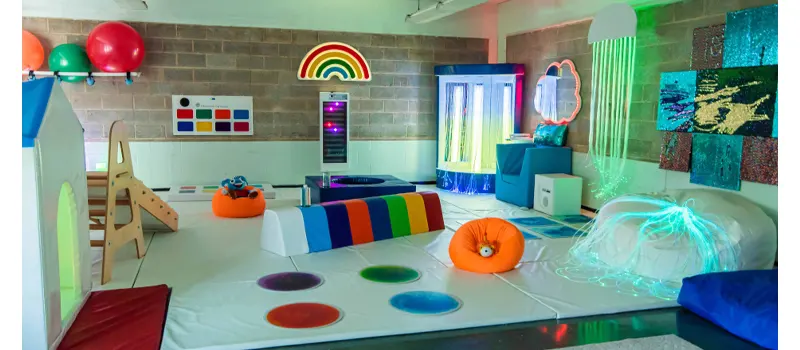
For students with sensory processing or motor skill challenges, balance activities provide a structured and fun way to improve body awareness and self-control. Plus, they offer a focused physical outlet that can be both energizing and calming, depending on how they’re used.
Sensory and Developmental Benefits
- Strengthens vestibular system for better balance and coordination
- Improves core strength and postural control
- Enhances motor planning and spatial awareness
- Promotes focus and calm through rhythmic, repetitive movement
Practical Setup Considerations for Schools
To ensure safe and effective use, balance tools should be introduced gradually and used in supervised, low-risk environments.
- Start with low, wide tools for beginners; progress to narrower options
- Use soft flooring or mats to prevent injury during slips or falls
- Ensure materials are stable and appropriate for the students’ age and ability
- Set clear rules such as slow movement and one student per tool
Final Thoughts About Sensory Room Ideas
The most effective Sensory Room Ideas are rarely the most impressive ones. They are the ideas that quietly solve real problems in schools. When a student can release energy safely, calm down without being isolated, or return to learning more regulated, the sensory room has done its job.
By thoughtfully incorporating sensory-friendly features like crash mats, calming tents, aromatherapy stations, and balance tools, schools can create spaces where every student feels seen, supported, and safe to be themselves. Start small, adapt as you go, and involve students in the process. After all, when we design spaces that respect how kids feel and function, we’re not just supporting sensory development—we’re building better learning communities.


 Arabic
  English
  French
  Italian
  German
  Spanish
  Thai
Thai  Japanese
  Portuguese
  Russian
  Korean
  Vietnamese
  Indonesian
  Turkish
  Polish
  Swahili