
Creating an Outdoor Classroom often sounds exciting, but many schools are unsure how to turn that idea into a space that truly supports learning. Moving lessons outside or adding a few outdoor tables is a start, but it rarely leads to long term success without thoughtful planning.
Outdoor classrooms are becoming more common as educators look for ways to encourage active learning and curiosity. When outdoor spaces are planned with clear goals, they can support physical development, problem solving, and social interaction while keeping children engaged.
To create an effective outdoor classroom, you’ll need to:
- Choose and map a site with shade, sun, and good accessibility for all students.
- Define clear learning goals so the outdoor classroom is more than “extra recess.”
- Provide basic infrastructure: seating, storage, writing surfaces, whiteboard, pathways, and weather-ready materials.
- Establish routines and behavior expectations so students see the outdoor classroom as a real learning space.
- Integrate regular lessons from your curriculum instead of treating outdoor learning as a one-off event.
In this article, we share practical techniques for creating outdoor classrooms that work in real school settings. From organizing outdoor learning areas to choosing suitable materials and activities, these strategies are designed to help educators build outdoor spaces that are both functional and meaningful.

What is an Outdoor Classroom?
An outdoor classroom is a learning space outside of the traditional indoor environment where students engage with curriculum content in the fresh air, natural surroundings, and open space. Unlike a regular playground or field trip location, an outdoor classroom is intentionally designed to support structured teaching and learning, often integrating nature, sensory experiences, collaboration, and hands‑on exploration.
Outdoor classrooms can take many forms:
- Schoolyard outdoor classrooms
These are often built in underused corners of a campus: along the side of a building, in a formerly empty grass patch, or on part of a blacktop. You might see raised garden beds, a ring of tree stumps, a small stage, and a few storage bins for tools and supplies. Teachers bring their class out for science investigations, reading circles, or even math problem-solving. - Nature-based preschool or forest kindergarten areas
In some early childhood programs, the outdoor classroom is the primary classroom. Kids might spend several hours a day outside in all seasons, exploring a wooded area, working with loose parts like sticks and stones, and learning basic skills through direct contact with the natural world. The environment is carefully curated but looks very natural and unstructured to the casual observer. - Community or backyard outdoor classrooms
Families, homeschool co-ops, and community centers often create smaller outdoor classrooms in backyards, church yards, or neighborhood gardens. Instead of fancy structures, you might see a simple picnic table, a chalkboard hung on a fence, a few planters, and a “discovery table” with pinecones, magnifying glasses, and field guides.
In the United States, outdoor classrooms have taken root in thousands of schools, early childhood centers, and community programs as educators recognize the powerful impact of place‑based education. Whether it’s early childhood students exploring soil and insects, elementary learners tracking seasonal change, or middle school classes conducting scientific investigations outdoors, the outdoor classroom fosters deep engagement and meaningful learning.
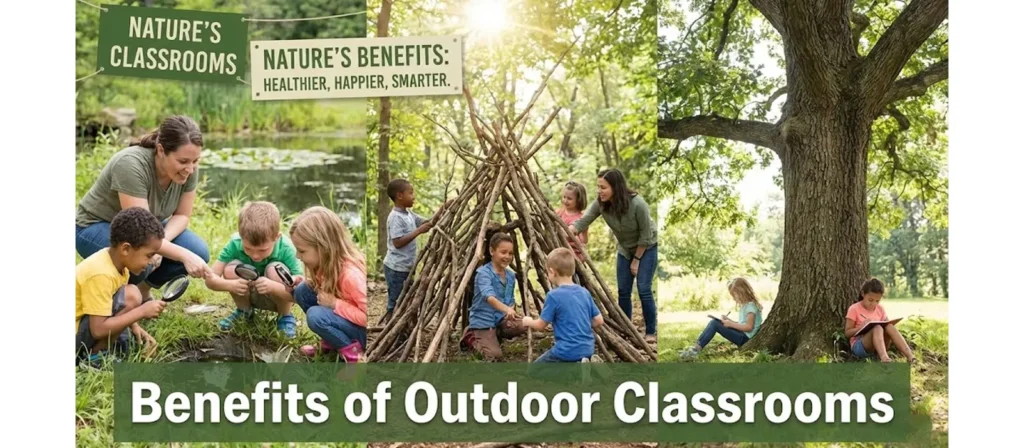
Benefits of Outdoor Classrooms
Outdoor classrooms are not a trend or novelty. A growing body of research and educator experience supports their positive impact on students’ physical, cognitive, emotional, and social development. People are increasingly concerned about issues such as sedentary behavior in children, attention fatigue, and lack of contact with nature, and outdoor learning offers solutions based on real evidence and practical results.
Below are six key benefits educators, parents, and school administrators consistently report when outdoor classrooms are thoughtfully implemented.
- Improved motor skills: Movement over varied outdoor terrain helps develop strength, coordination, and balance.
- Increased focus: Natural settings reduce mental fatigue and help students concentrate better.
- Enhanced creativity: The open-ended nature of outdoor spaces encourages imaginative play and thinking.
- Improved problem-solving skills: Real-world challenges in nature require critical thinking and collaboration.
- Greater understanding of nature: Firsthand interaction with the environment builds ecological awareness.
- Improved mental health: Time outdoors has been linked to reduced stress and anxiety in students.
These benefits are not automatic. They show up most strongly when the outdoor classroom is used regularly, intentionally, and with good routines.

Considerations for Creating an Outdoor Classroom?
Knowing the benefits is exciting, but if you skip the planning step, you can end up with a pretty garden that hardly gets used, or a “learning space” that is really just recess with clipboards. Before you roll out the mulch or order the benches, it is worth slowing down and thinking carefully about who you are designing for and what you want to accomplish.
1. Child’s age
Children at different ages interact with outdoor environments in different ways. Younger children need simple layouts, clear boundaries, and easy access to materials, while older children can handle more complex activities and flexible spaces. Designing with age appropriateness in mind helps children feel confident and supported.
2. Type of activities
The phrase “outdoor classroom” covers a huge range of possible outdoor activities. If you are not clear about what you actually want to do outside, you may end up with beautiful elements that do not get used.
Ask yourself:
- Are we primarily doing science investigations and environmental education?
- Do we want to use the space for literacy as well—reading circles, writing workshops, storytelling?
- Will we do art projects outdoors on a regular basis?
- Is the space also meant to support social–emotional learning, class meetings, or counseling groups?
- Do we hope to use the outdoor classroom for family nights, community events, or after-school programs?
Most schools blend several of these. The key is to identify your top two or three activity categories up front and design the outdoor classroom around those, instead of trying to cram in everything at once.
3. Size of the outdoor space
You can create a powerful outdoor classroom on a surprisingly small footprint, but you do need to be realistic about what your site can support. A huge, sprawling vision squeezed into a tiny area will feel crowded and chaotic.
4. Children’s interests and abilities
Learner engagement is highest when activities connect to students’ interests. An outdoor classroom should reflect and respond to what students are curious about — plant growth, insects, weather, music, art, or engineering challenges.
Consider conducting a simple interest inventory before designing the space. What do students want to explore most? What skills do they already have that you can build on? What areas present growth opportunities?
5. Weather type
In much of the United States, weather is not just a background factor; it can make or break outdoor learning. Schools in the Pacific Northwest have to think about rain. Schools in Arizona worry about extreme heat. Midwestern schools juggle all four seasons, sometimes in one week.
If you want an outdoor classroom that actually gets used, you need a weather plan.
Start by listing your local weather realities:
- How hot does it get in late spring and early fall?
- How cold does it get when school is still in session?
- How much rain or snow do you typically get?
- How windy is your site?

Planning Your Outdoor Classroom
Before rushing into setup, proper planning ensures your outdoor learning space is safe, functional, and engaging.
Site Selection
Selecting where to establish your outdoor classroom lays the foundation for success. Ideal sites:
- Are close to indoor facilities for easy transitions.
- Offer natural features like trees, gardens, rocks, or open grass.
- Include zones for learning, play, and reflection.
Safety First
Safety should be at the core of every decision when creating an outdoor classroom. Conduct a risk assessment:
- Check ground surfaces for tripping hazards.
- Identify allergens, poisonous plants, and unsafe slopes.
- Plan for insect control without harmful chemicals.
Aside from physical safety, develop behavior expectations specifically for outdoor learning. From proximity boundaries to tools usage.
Accessibility & Comfort
An inclusive outdoor classroom accommodates all learners:
- Provide smooth paths for wheelchairs and strollers.
- Offer seating alternatives, like logs, benches, or cushions.
- Ensure shaded areas for hot days and plans for rainy weather.
Comfort and accessibility directly impact student focus and participation.
Core Techniques for Creating an Outdoor Classroom
Creating an effective outdoor classroom requires more than placing furniture outdoors. Clear structure and intentional design help transform an open space into a functional learning environment that supports daily use.
1. Divide Learning Areas
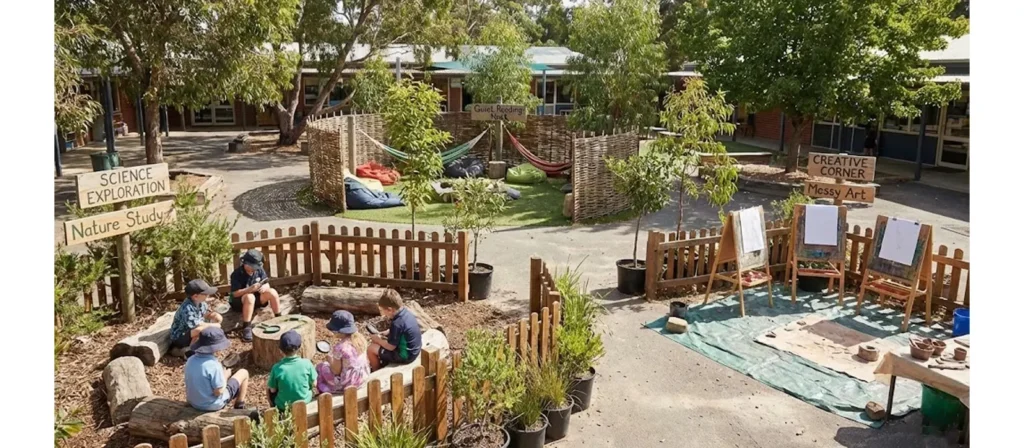
One of the biggest mistakes schools make is treating the outdoor classroom as one big blob of space. In practice, the best outdoor classrooms are divided into distinct learning zones, each with a clear purpose. This mirrors what works indoors: rug area, small-group table, library corner, lab benches.
Outdoors, you might define:
- A gathering circle or semicircle for whole-group instruction
- A hands-on science or garden zone
- A quiet reading/writing area
- A flexible “project” zone for building, art, or STEM challenges
You don’t need permanent walls. Simple techniques work:
- Low planters or raised beds to outline a science zone
- A line of logs or stumps marking the edge of the gathering area
- Painted lines or shapes on blacktop to show where students sit or stand
- A change in ground material (mulch to pavers, grass to gravel) to signal a shift in space
The goal is for students to instantly understand where different kinds of learning happen. When you say, “Head to the observation area,” they should know exactly where that is. That clarity drastically reduces wandering, confusion, and “I didn’t know where to go” behavior.
In many schools, space is tight, so zones often overlap. That is fine as long as expectations shift with location and task. For example, the same semicircle of benches can be a discussion circle at 9:00 and a lab-instruction spot at 10:30. The key is to name the purpose each time and keep routines consistent.
2. Seating and shade
Comfortable seating encourages children to stay engaged during outdoor learning activities. Shade is equally important, as it protects children from sun exposure and allows the space to be used for longer periods. Both seating and shade should be flexible and easy to adjust.
3. Natural and Sustainable Materials
Using natural and reclaimed materials isn’t just cost-effective—it aligns with the ethos of nature-based learning. Avoiding plastic or overly manufactured items keeps the outdoor classroom grounded in real-world textures and experiences.
Think logs for seating, wooden pallets as tables, river stones for math manipulatives, and sticks for building. Even whiteboards can be framed with driftwood or mounted on tree trunks for a more integrated aesthetic.

4. Seasonal Adaptability
Outdoor classrooms that work year-round are designed with weather in mind. In many parts of the U.S., weather can shift dramatically within hours. Planning for seasonal change ensures outdoor learning continues even when it’s not 72 and sunny.
Key considerations include:
- Waterproof seating cushions and blankets for chilly days
- Tarps and storage bins to protect materials
- Shelters or lean-tos for wind and rain cover
- Rotating activities based on seasonal themes (e.g., leaf observations in fall, bird tracking in spring)
5. Interactive Features
Kids learn by doing, not watching. Adding interactive features that students can manipulate, move, or build helps reinforce content and fuel engagement.
These features don’t need to be expensive. A pile of smooth rocks and some paint can turn into a student-built alphabet path. A set of laminated prompt cards attached to a tree can guide inquiry questions in different subject areas.
6. Technology Integration Outdoors
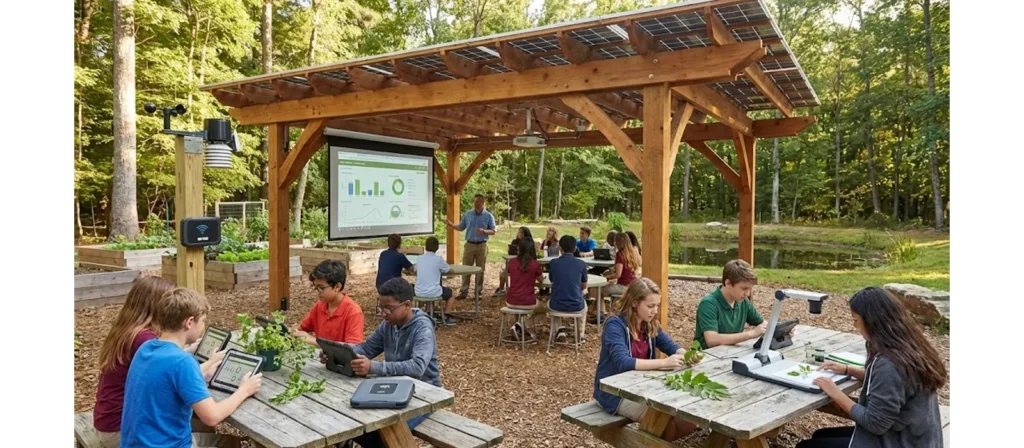
Outdoor learning and technology are often treated as opposites: you’re either unplugged in nature or staring at a screen. In reality, smart tech integration can deepen outdoor learning instead of replacing it.
Ways to blend tech with an outdoor classroom include:
- Using tablets or Chromebooks for data collection: photographing plant growth, recording audio observations, logging measurements into shared spreadsheets
- QR codes on signs that link to short videos, field guides, or audio explanations created by students
- Digital microscopes or clip-on lenses that let students zoom in on leaves, insects, or soil samples
- Simple weather-station connections that upload local data to an online platform students can analyze over time
The key is to keep technology as a tool, not the main event. You want students looking at the real plant, the real sky, the real soil, while using tech to capture, extend, or share what they notice.
What Should Be in an Outdoor Classroom?
An effective outdoor classroom includes essential elements that support learning, comfort, and organization. These components help transform an open outdoor space into a functional environment that educators and children can use consistently throughout the day.

1. Outdoor Classroom Furniture
When people hear “furniture,” they often jump straight to benches and tables. That’s part of it, but for an outdoor classroom, furniture is really about how you define the room: where students gather, where materials live, where the teaching “front” is, and how the space flows.
You can think of outdoor classroom furniture in four main groups:
- Teaching furniture
- Student work surfaces
- Space-defining pieces
- Multi-use structures

2. Outdoor Classroom Equipment
The right equipment turns a natural space into a dynamic extension of the curriculum.
- Clipboards, paper, and weatherproof writing materials for journaling or note-taking
- Measurement tools such as rulers, thermometers, rain gauges, and magnifying glasses
- Bins or baskets for collecting leaves, rocks, or samples from nature
- Visual aids like laminated charts, ID cards for plants and insects, or mini-whiteboards for group work
- Tools for garden-based learning if applicable: trowels, watering cans, gloves, and plant markers

3. Outdoor Classroom Storage
One of the most overlooked aspects of an outdoor classroom is how and where materials are stored. Lack of planning here can result in tools being lost, damaged by weather, or simply becoming inaccessible when needed.
- Weatherproof storage bins or deck boxes for keeping supplies dry
- Shelving units made of treated wood or composite for tools, books, or equipment
- Lockable cabinets for more sensitive or expensive materials
- Rolling carts that allow teachers to move supplies in and out as needed

4. Outdoor Classroom Seating
Seating is so important that it deserves its own spotlight, even though it technically falls under furniture. Students who are uncomfortable, crowded, or unsure where to sit spend more energy fidgeting than learning.
Outdoor seating has to balance four factors:
- Comfort
- Flexibility
- Durability
- Accessibility
Get those right, and your outdoor classroom becomes a teaching asset instead of a management headache.
Avoiding Common Pitfalls in Outdoor Classrooms
Even with the best intentions, some outdoor classrooms fall flat. But knowing what to avoid is just as important as knowing what to include.
- Not planning for varied weather: Without structures or systems in place to handle rain, heat, or wind, the outdoor classroom ends up underused or seasonally abandoned.
- Weak curriculum alignment: If outdoor learning isn’t clearly tied to standards or learning objectives, it can feel like free time rather than real instruction, leading to pushback from administrators or staff.
- Adding too many features without purpose: Overloading the space with trendy elements—mud kitchens, bug hotels, or unused musical walls—can lead to clutter and confusion. Every element should serve a clear purpose.
- Ignoring equity and accessibility: If students with disabilities, sensory sensitivities, or behavioral challenges can’t fully participate, the space is incomplete. Accessibility must be a design priority, not an afterthought.
- Lack of teacher training or confidence: Even a great space won’t get used if teachers feel unprepared. Without structured support or planning time, outdoor classrooms may sit idle or get used inconsistently.
- Forgetting behavior and routines: Some teachers avoid outdoor classrooms not because they dislike nature, but because they picture chaos: kids sprinting everywhere, climbing everything, and tuning out directions.
FAQs
- What are the first steps in creating an outdoor classroom?
Start by assessing potential spaces, ensuring safety, and designing flexible zones that support different types of learning activities. - How can outdoor classrooms support academic goals?
They connect curriculum to real‑world experiences, boost engagement, and enhance retention by involving multiple senses and hands‑on exploration. - Is technology allowed in outdoor classrooms?
Yes — when used purposefully. Tools like QR codes, portable projectors, and outdoor Wi‑Fi can enrich but shouldn’t replace nature‑based exploration. - Do I need a big budget to start an outdoor classroom?
No. Many successful outdoor classroom projects start with almost no budget: a defined area, movable seating, clipboards, and a portable whiteboard. You can add plants, structures, and specialized tools gradually as funding becomes available. - What if my school only has a small paved area?
You can still create a meaningful outdoor classroom on pavement. Use planters or raised beds for greenery, chalk to define zones, mobile benches or crates for seating, and simple shade structures if needed. The key is treating that defined area as your outdoor classroom and integrating it into real lessons regularly. - How often should I use the outdoor classroom?
Consistency matters more than perfection. Aim for at least one outdoor classroom session per week at first. As routines become smoother and you see the benefits, you can increase usage to multiple times a week or embed the outdoor classroom in specific units across the year.
Conclusion
Creating an outdoor classroom is both a design project and a culture shift. You are not just building a space; you are changing habits, expectations, and routines around where learning can happen. That takes time.
If you are just starting, it is okay to think small and practical. Mark off a corner of the schoolyard. Borrow a few benches or plastic chairs. Bring clipboards and read a story under the sky. Notice what works, what feels awkward, and what gets your students buzzing with curiosity.
Over time, with consistent use and thoughtful tweaks, your outdoor classroom can become one of the most important “rooms” in your learning community—a place where kids feel grounded, capable, and connected, not just to school but to the world beyond its walls.

 English
  Arabic
  French
  Italian
  German
  Spanish
  Thai
Thai  Japanese
  Portuguese
  Russian
  Korean
  Vietnamese
  Indonesian
  Turkish
  Polish
  Swahili